Build for the request already arriving
The market was shipping, competing, and changing faster than a product marketing team could keep static enablement current. Competitive requests still arrived in real time: a seller preparing for a call, a pricing objection inside a live deal, or a new competitor that had changed its story that week.
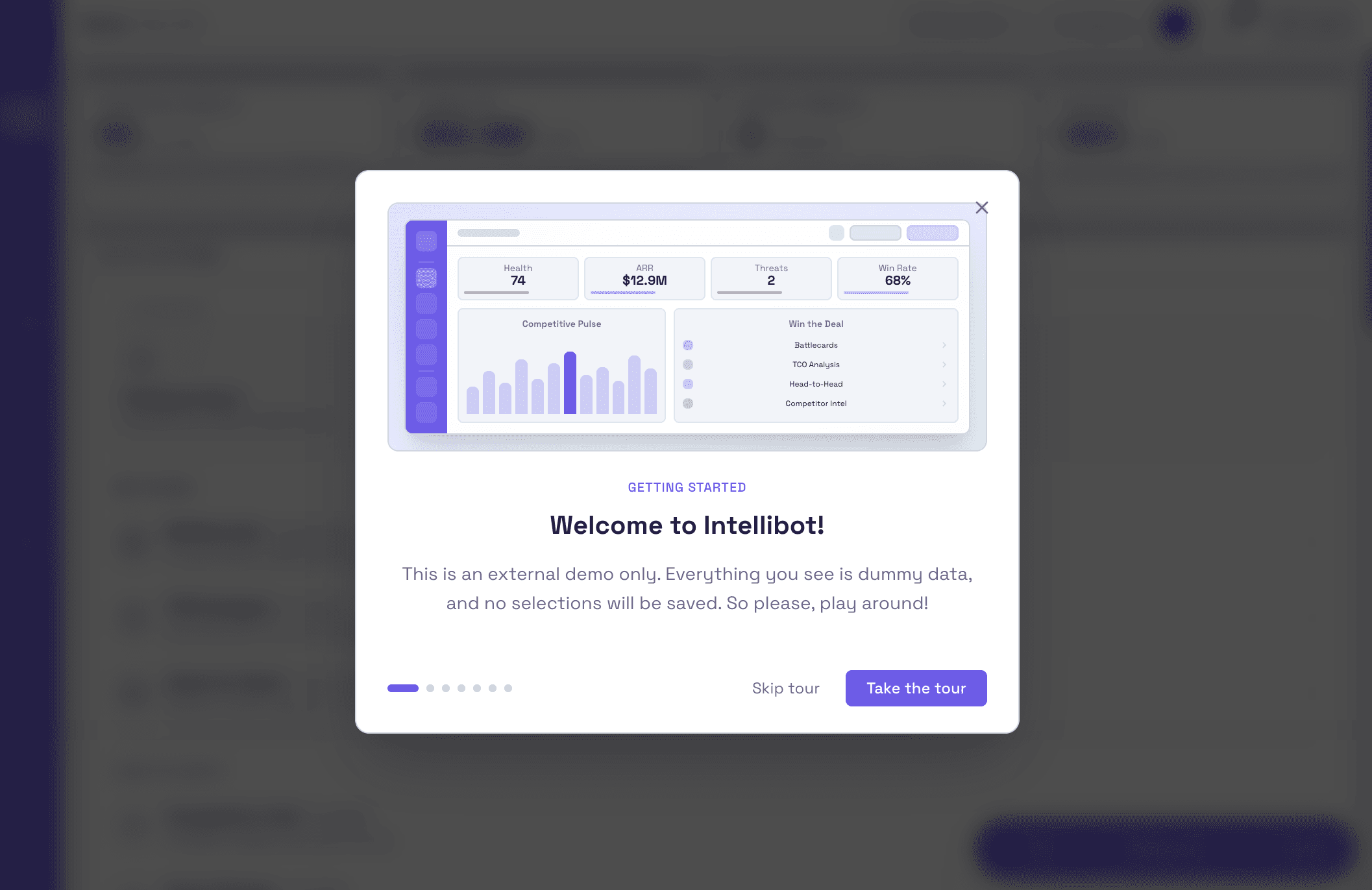
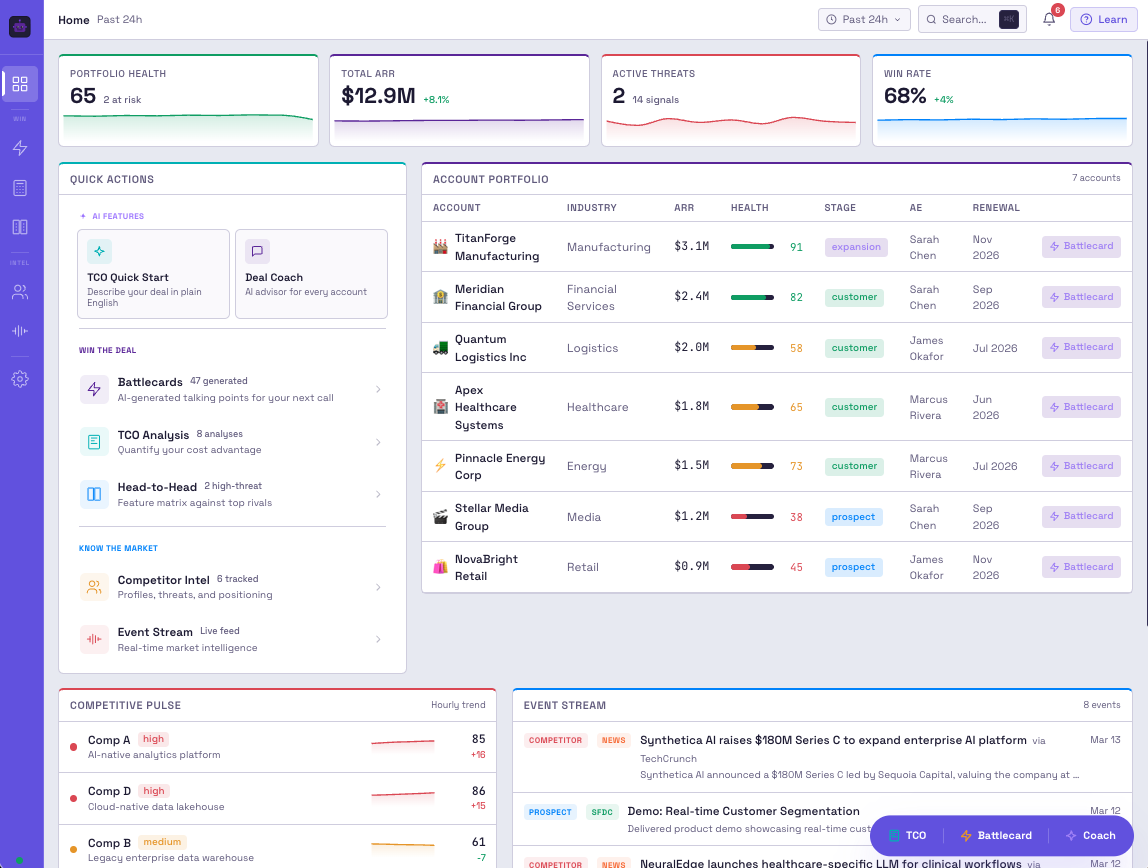
I built Intellibot as an internal way to answer those requests with more depth and less delay. The public version uses dummy data so the method can be inspected without exposing live deal context.
Generate, don't maintain
A static battlecard asks one document to serve every account, industry, deal stage, and audience. It also begins aging the moment it is published.
Intellibot tested a different model: generate a fresh battlecard for the specific deal, drawing from the account, competitor, call evidence, customer sentiment, market movement, and product roadmap. PMM judgment remains the architecture. The tool handles assembly and distribution so useful support is not reserved for only the largest deals.
The design question was not whether AI could write a comparison. It was whether a system could make current evidence easier to inspect, adapt, and use without losing the point of view that makes competitive strategy coherent.
Make the methodology defensible
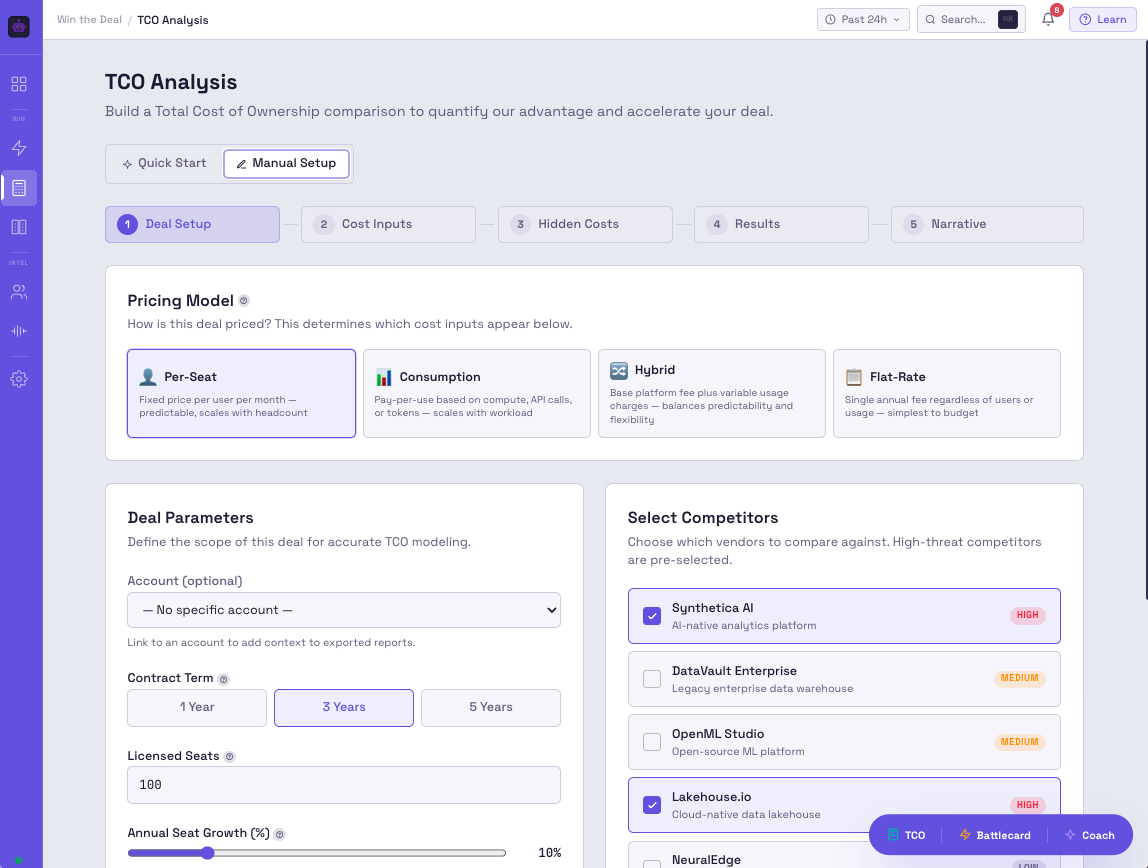
The TCO tool addresses a second recurring request: move a competitive conversation beyond sticker price and toward the cost of actually owning the product.
The model works from the bottom up across 11 cost categories and four lifecycle phases. Every input is editable. Every assumption is named. Licensing, implementation, migration, training, support, administration, integrations, customization, downtime, and supplemental tooling can be challenged in the room.
The methodology—not a set of cherry-picked defaults—should create the advantage. When the reasoning remains visible, disagreement becomes useful: change an assumption, see what follows, and make the tradeoff explicit.
Share the working model
After using the ideas internally, the external demo became a way to share the approach with other product marketers at a PMM Lunch and Learn in San Francisco. It preserves the working interactions so the community can inspect, question, and adapt the model without exposing internal evidence, live deal context, adoption, or production security controls.
Public artifacts
Intellibot - the public, anonymized demo with dummy data.
Battlecard philosophy - why static battlecards fail in fast-moving AI markets and what instant, deal-specific generation changes.
TCO analysis philosophy - the bottom-up cost model, named assumptions, and interface decisions behind the tool.
The Hard Launch - the PMM community calendar for the San Francisco Lunch and Learn and future events.