Begin with witness
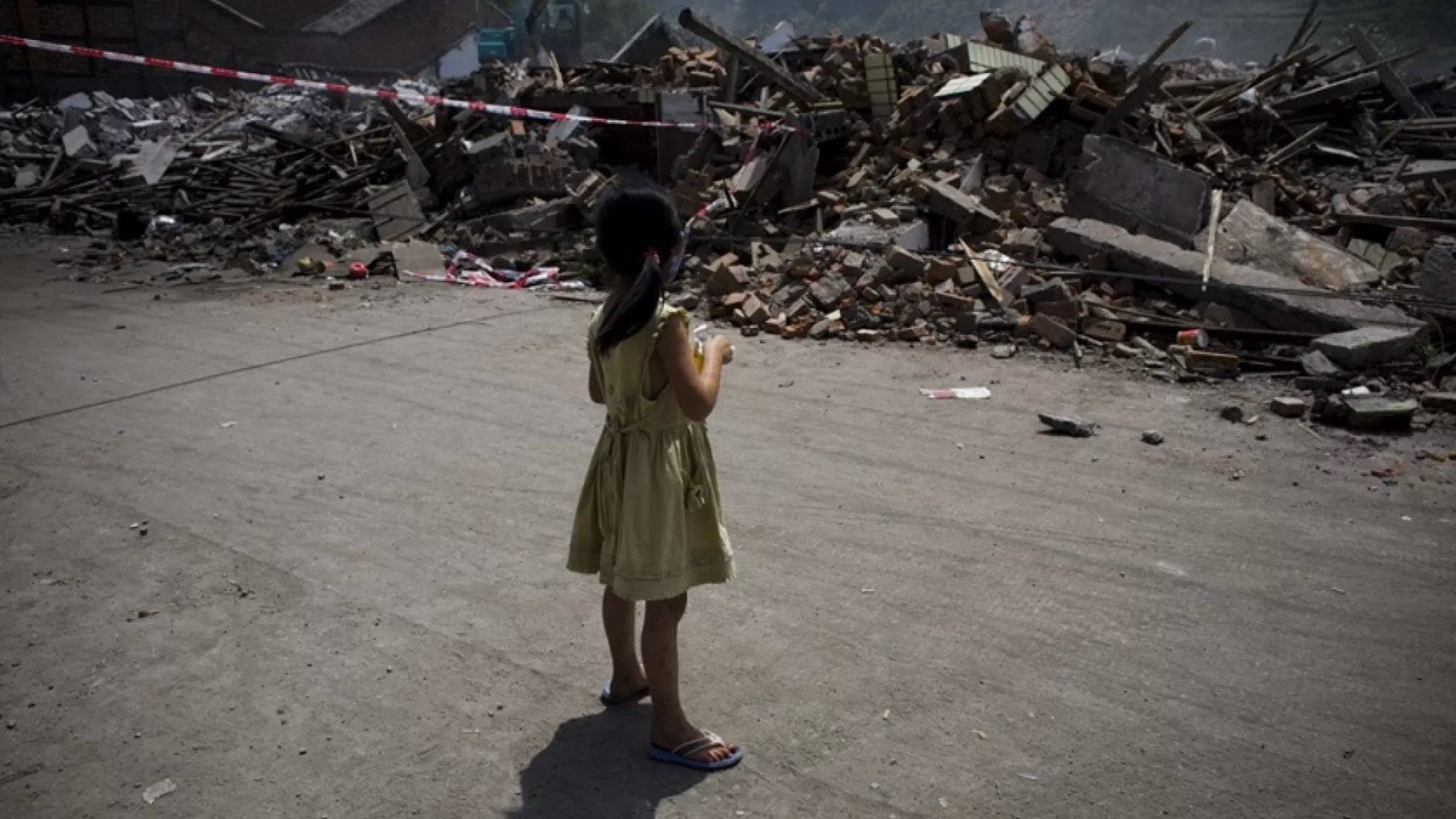
In May 2008, a magnitude 7.9 earthquake struck Sichuan, my home province. The scale was almost impossible to hold at once: collapsed schools, families searching for children, whole communities working through dust and grief. Make Something Beautiful began as a talk for a UNICEF USA fundraising gala sixteen years later, but its first scene is the summer when humanitarian crisis stopped being an abstraction for me.
In May of 2008, a devastating earthquake hit my home province of Sichuan. More than 7,000 classrooms collapsed and 20,000 students were killed or injured. Backpacks, schoolbooks, tiny shoes were unearthed from the rubble.
That summer, the disaster became personal at human scale. Through my uncle, I met Tiantian, a girl my age whose laughter cut through my fear and drew me out of the van. Her friendship sits inside a much larger humanitarian record—rescue crews, families, aid organizations, and neighbors preserving dignity while rebuilding lives that could not simply be restored to what they had been.
It wasn’t until a girl my age, who recognized my uncle’s van, ran to greet us that I finally got out of the car. Her name was Tiantian, a diminutive for 天, meaning “sky” or “heaven”.
Turn witness into a reporting practice
The experience in Sichuan became the beginning of a decade writing for UNICEF's Voices of Youth and contributing to humanitarian stories that reached readers in 180 countries. The work asked for more than attention. It required holding parallel truths together: aid and unanswered questions, devastation and generosity, the scale of a crisis and the specificity of one person's life.
That became a reporting practice: pull back the curtain, find poetry in unexpected places, and choose stories worthy of being carried forward. The goal was never to make suffering picturesque. It was to preserve context and agency—to show people not only as recipients of aid, but as neighbors, students, parents, organizers, and makers of their own futures.
Real stories live in the space between tragedy and hope—in Tian’s laughter that enlivened the village, in parents who lost their own children but still helped neighbors search through the rubble.
Build the field, not only the campaign
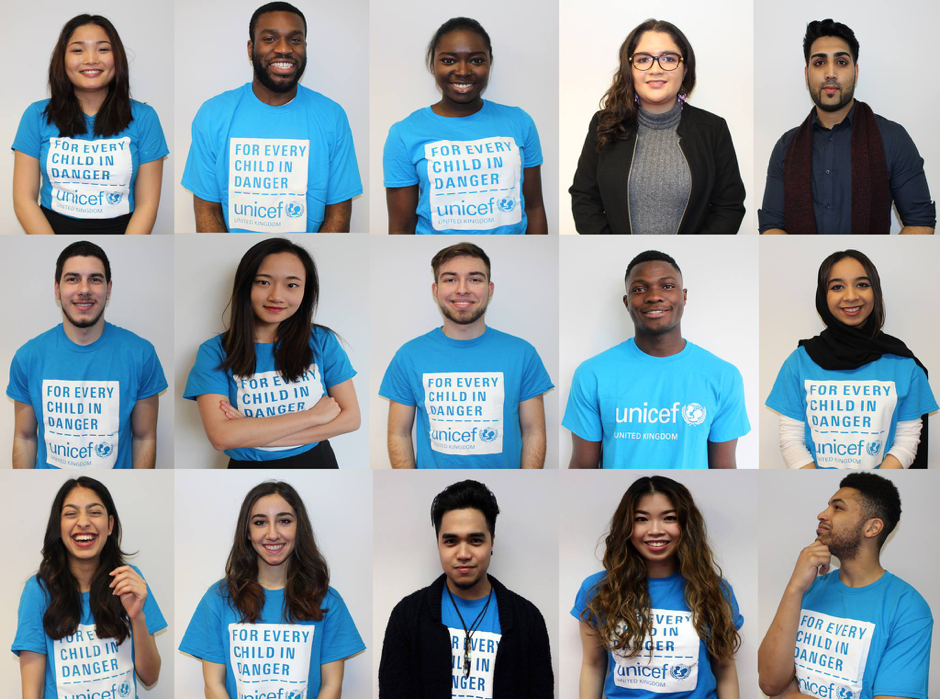
The work expanded from storytelling into a repeatable way for young people to organize locally inside a global institution. UNICEF Clubs grew to more than 800 chapters and mobilized 30,000 young people. But the useful unit was always one group of students who understood the mission, knew their community, and could decide what to do next.
Impact at that scale came from making the handoff work. The program connected onboarding, leadership roles, shared resources, repeatable actions, and a global commitment to children's rights—enough structure to protect the mission, with enough room for local judgment.
Design the handoff
A distributed program cannot depend on headquarters making every decision. Consistency should make local action safer, not smaller. The operating blueprint helped students begin, learn from one another, and adapt campaigns to the needs in front of them without turning every club into a copy of the center.
The same principle carried into humanitarian reporting and later field collaboration: preserve the specificity of the place, then make the evidence useful to someone far away. That work included reports following the Sichuan earthquake, youth participation in UNICEF's 2022–2025 strategic plan, and a 2022 UNHCR–Autodesk Foundation collaboration on refugee shelter.
Carry dignity through scale
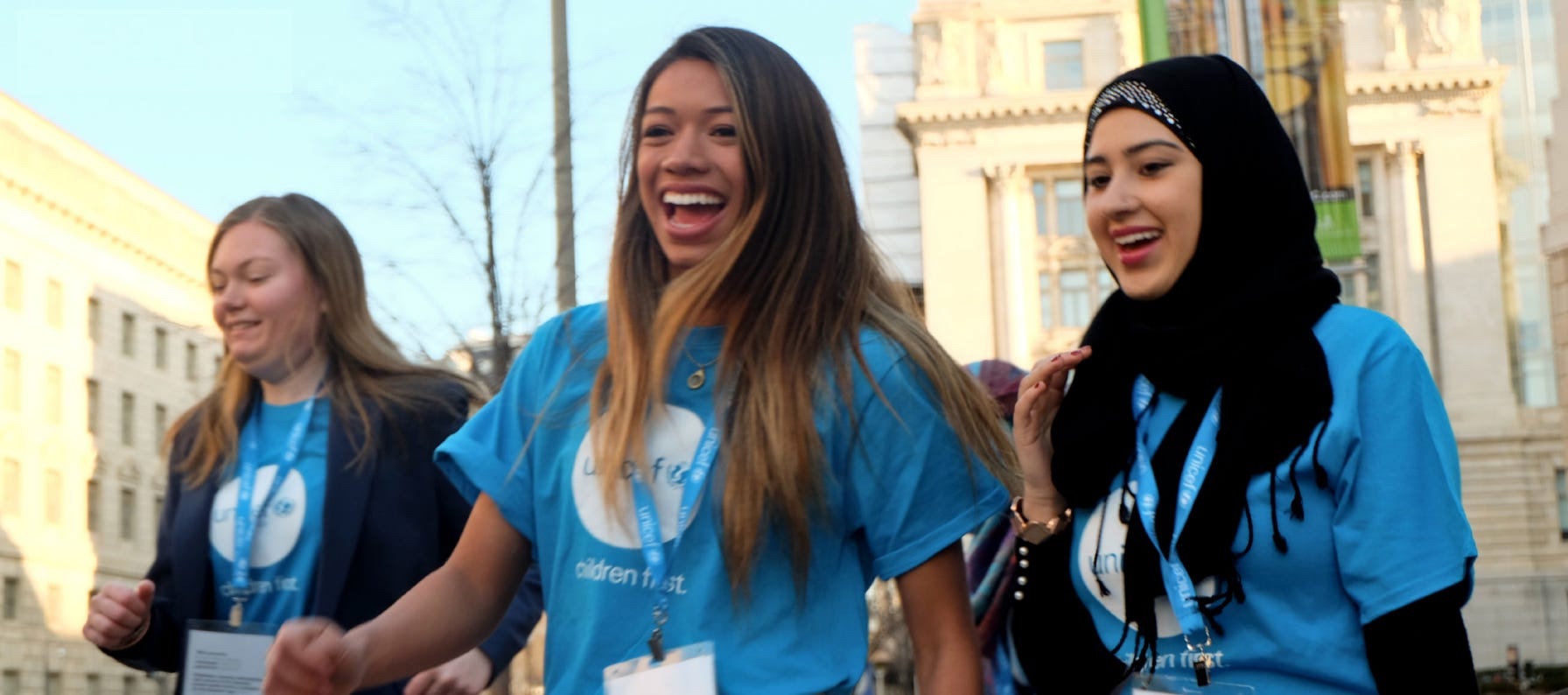
Global humanitarian work is measured in systems—classrooms rebuilt, water pumps installed, children vaccinated—but experienced one life at a time. The discipline is to let scale clarify responsibility without allowing it to erase the person. That is the throughline from Sichuan to a global youth network: make it possible for more people to act while keeping faith with the lives the work is meant to serve.
Crisis reveals not only what we’ve lost, but what we refuse to let go: our capacity for kindness, our hunger for stories, our quest for hope.
Public artifacts
Read Make Something Beautiful - the full essay, adapted from my talk for a UNICEF USA fundraising gala, reflecting on sixteen years of humanitarian crisis and aid.
UNICEF USA High School Clubs handbook - the operating blueprint for local chapters.
State of the World's Children - the adolescence companion report.
Sichuan earthquake: one-year, two-year, and three-year reports - the humanitarian record after the 2008 earthquake.
World Water Week: How You Can Help - a piece I wrote for my local paper to promote the UNICEF Tap Project and raise funds for the chapter I ran.
How to Get Involved With UNICEF - In 2018, as I was transitioning off a 10-year period of writing for UNICEF's Voices of Youth, I shared my thoughts on how others could harness the power of their own communities, just as I did in 2008.